
















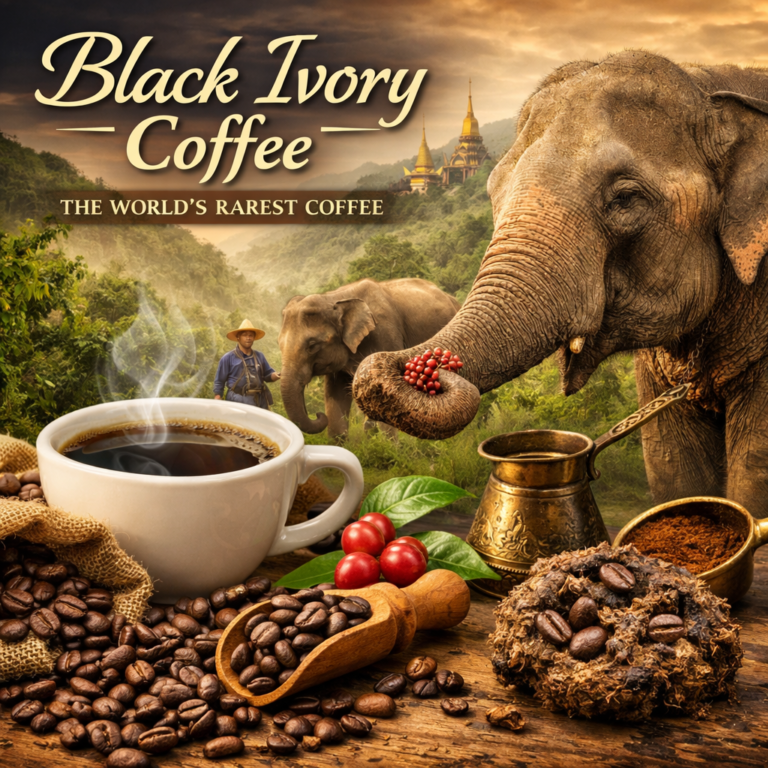
Black Ivory Coffee is one of the world’s rarest and most expensive coffees because its beans are naturally fermented inside an elephant’s digestive system, a process that science shows reduces bitterness and enhances complex flavor. Below is a full, research‑backed breakdown of how it’s made, why it tastes the way it does, and the ethical and scientific realities behind the hype.
Everything You Need to Know About Black Ivory Coffee — And the Science Behind It
Black Ivory Coffee isn’t just a luxury beverage; it’s a biological experiment, an ethical debate, and a flavor profile shaped by nature itself. Produced in northern Thailand, this coffee undergoes a transformation unlike any other: Arabica cherries are eaten by elephants, digested, excreted, collected, cleaned, dried, and roasted. The result is a cup that’s famously smooth, low in bitterness, and subtly sweet.
☕ What Makes Black Ivory Coffee So Rare?
Only 1–2% of beans fed to elephants survive digestion intact, according to a 2019 University of Thailand study, making yields extremely low and prices extremely high—often over $500 per pound.
The rarity is also due to:
- Hand‑selection of high‑altitude Thai Arabica cherries
- Labor‑intensive collection from elephant dung
- Significant bean loss from chewing, breakage, or digestion
- Slow, artisanal processing rather than industrial methods
It takes 33 kg (72 lbs) of raw cherries to produce 1 kg (2.2 lbs) of finished coffee.
🧬 The Science: Why Elephants Change the Flavor
The magic happens inside the elephant’s digestive system.
1. Enzymatic Breakdown Reduces Bitterness
Bitterness in coffee comes largely from proteins.
Inside the elephant’s gut, digestive enzymes break down these proteins, resulting in a smoother, less bitter cup.
2. Natural Fermentation Adds Complexity
As the beans sit in the elephant’s stomach for 12–72 hours, they undergo:
- Microbial fermentation
- Enzymatic hydrolysis
- Absorption of fruit sugars
This fermentation softens acidity and adds chocolatey, malty, and tea‑like notes.
3. Slow Transit Time Enhances Flavor
Elephants digest food slowly—much slower than civets used in Kopi Luwak production.
This extended fermentation window allows for:
- Deeper flavor development
- More thorough protein breakdown
- A cleaner, more refined taste
🐘 Ethics: Is It Cruel or Sustainable?
Black Ivory Coffee Company emphasizes that elephants are not force‑fed. Cherries are mixed into their normal diet of rice, bananas, and tamarind.
Key ethical points:
- Elephants are part of a conservation‑focused program.
- Mahouts (elephant caretakers) and their families are paid premium wages.
- The process is marketed as cruelty‑free and environmentally conscious.
Still, ethical concerns remain in the broader industry, so authenticity and sourcing transparency matter.
🔬 What Does the Final Cup Taste Like?
Most tasters describe Black Ivory Coffee as:
- Exceptionally smooth
- Low in acidity
- Low in bitterness
- Chocolatey, floral, and slightly fruity
- Almost tea‑like in body
These traits directly correlate with the protein breakdown and fermentation inside the elephant’s digestive system.
🏁 Final Takeaway
Black Ivory Coffee is a fusion of biology, craftsmanship, and luxury marketing. The science is real: enzymatic digestion and natural fermentation genuinely alter the bean’s chemistry, producing a smoother, less bitter coffee. But its rarity, labor‑intensive production, and ethical considerations are just as central to its story.
Discover more from Deadly Facts
Subscribe to get the latest posts sent to your email.


0 Comments