






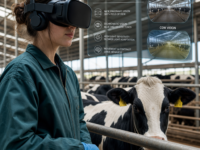







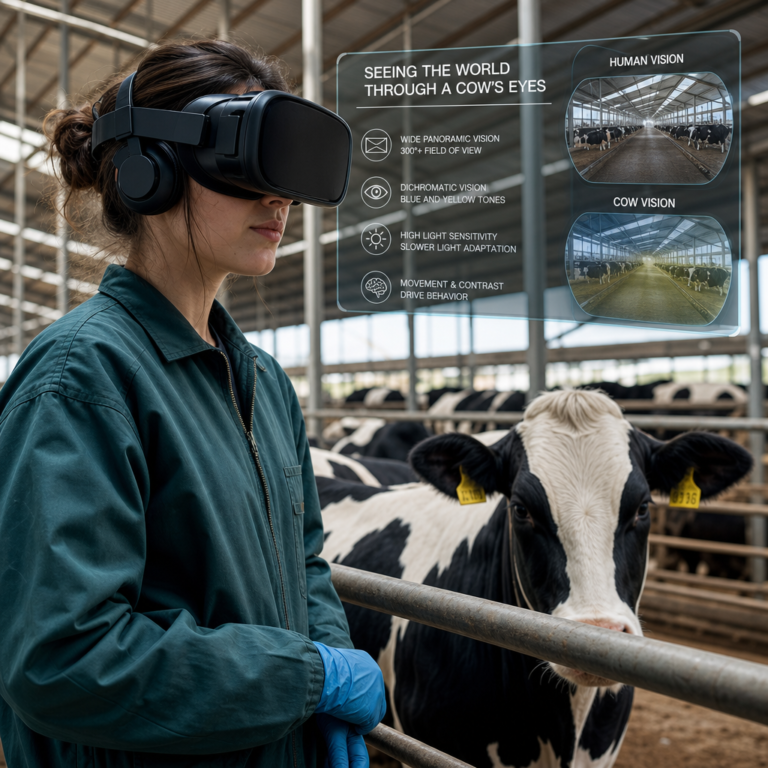
Some farms in the U.S. are experimenting with VR headsets for cows — but not in the way you might think. The trend isn’t about entertaining cattle with virtual pastures. Instead, researchers and livestock handlers are using virtual and augmented reality tools to simulate how cows see the world, helping humans redesign barns, chutes, and handling practices to reduce stress and improve welfare.
Below is a full, SEO‑ready blog post you can publish as‑is.
🐄 Some Farms in the U.S. Are Putting VR Headsets on Cows — Here’s Why
When you picture a cow wearing a VR headset, you might imagine a futuristic farm where cattle roam digital meadows. The reality is far more practical — and surprisingly impactful. Across the U.S., researchers and livestock handlers are using virtual reality (VR) and augmented reality (AR) headsets not on cows, but on humans, to simulate bovine vision. The goal? To understand how cows perceive their environment and to create calmer, safer, more humane farms.
This technology is reshaping animal welfare training and facility design — and it’s already producing measurable improvements.
👁️ Why Simulate a Cow’s Vision?
Cows see the world very differently from humans. Their eyes are positioned on the sides of their head, giving them a panoramic field of view of more than 300 degrees, but with blurry peripheral vision. They also have dichromatic vision, meaning they see mostly in shades of blue and yellow — reds appear brown, and depth perception is limited.
These differences explain why cattle may balk at shadows, hesitate at doorways, or become stressed in bright sunlight. Their eyes also take much longer to adjust when moving between dark barns and sunny outdoor areas.
Understanding these visual challenges is crucial for designing low‑stress environments.
🥽 How VR Headsets Are Used on Farms
At the University of Wisconsin–River Falls, researchers developed an Animal Eye Simulator — a VR system that lets farmers and meat‑processing staff “see like a cow.” The setup includes:
- A 360‑degree camera mounted on a helmet
- A pair of VR goggles worn by the human user
- Software that recreates a cow’s field of vision, color perception, and light sensitivity
When a handler walks through a barn wearing the headset, they experience exactly what a cow would see — including confusing shadows, blinding sunlight, or disorienting vertical bars in pens.
This immersive perspective has already led to facility improvements. For example, researchers noticed that vertical metal bars in cattle pens were visually confusing for cows, so they replaced them with solid sides, making movement easier and reducing stress.
🧠 The Science Behind the Movement
The idea of designing livestock facilities from the animal’s perspective isn’t new. Animal behavior expert Temple Grandin pioneered this approach in the 1970s by physically crawling through chutes to identify stress triggers. VR technology now allows farmers to do this more accurately and safely.
Researchers and animal‑welfare specialists say VR training:
- Builds empathy for livestock
- Helps handlers understand why cows stop, turn, or panic
- Improves worker safety
- Leads to smoother, low‑stress cattle movement
- Enhances meat quality and milk production by reducing stress hormones
Participants often describe the experience as eye‑opening — literally.
🐮 Are Cows Themselves Wearing VR Headsets?
Not in the U.S.
While viral photos from Russia once showed cows wearing VR goggles to simulate grassy fields, U.S. farms are not putting VR devices on cattle. Instead, humans wear the headsets to better understand cattle behavior and improve welfare practices.
The technology is a training tool — not a cow accessory.
🌱 What This Means for the Future of Farming
VR‑based livestock training is still new, but early results are promising. Farms using the technology report:
- Calmer cattle
- Fewer handling accidents
- More efficient movement through barns and chutes
- Better facility design
- Improved animal welfare overall
As the agriculture industry faces increasing pressure to prioritize humane treatment, VR tools may become standard in training programs across the country.
📝 Final Thoughts
The idea of cows wearing VR headsets might sound like a meme, but the real story is far more meaningful. By using VR to see the world through a cow’s eyes, farmers are creating safer, more compassionate environments for livestock — and transforming modern agriculture in the process.
Discover more from Deadly Facts
Subscribe to get the latest posts sent to your email.


0 Comments